Premiere or Press Day: Two Events, Two Different Jobs
Premiere or press day: learn how each event shapes a viewer’s first impression, from a crowd’s shared reaction to the interviews that frame a release.
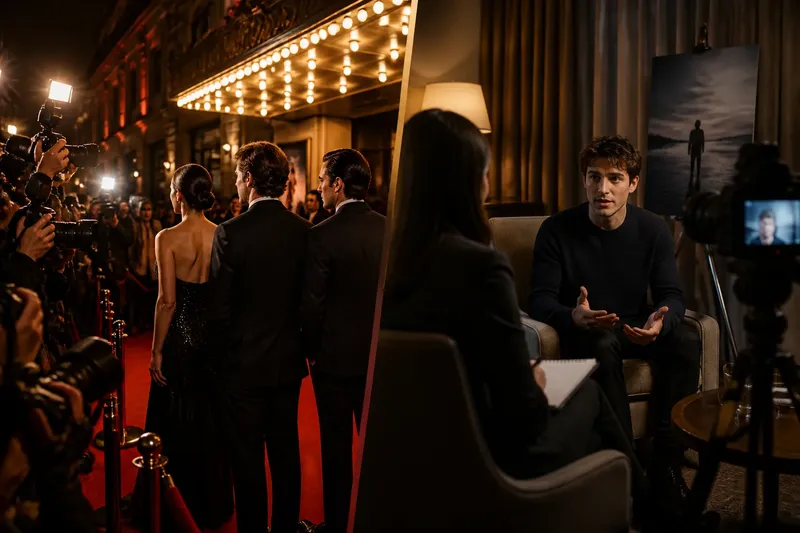
You watch a cast arrive under bright lights, then see a clip of one performer answering questions in a hotel room. Both moments may promote the same film, but they serve different jobs. A premiere turns a screening into a public occasion; a press day creates material that can introduce the film through interviews. To understand what a viewer encounters, start by asking what each event is built to produce.
Start with the purpose
A premiere puts the work in front of an invited audience and gives that viewing a visible social frame. The screening is the center of the event, even when cameras, a carpet, photographers, and celebrity arrivals attract attention first. The audience’s presence matters: guests see the film together, and their reactions can become part of the public story around its release.
A press day, by contrast, is organized around conversations. Performers, directors, writers, or other representatives answer questions for outlets that may publish articles, broadcast segments, or produce short videos. The film is still the subject, but the immediate product is interview material rather than a shared screening experience.
That difference changes the questions an event can answer. A premiere can show who attended, how the room responded, and what it felt like to gather around a release. A press day can explain creative decisions, introduce participants, and supply details that may help a potential viewer decide whether the work interests them.
Think of the premiere as a room arranged around a stage and the press day as a desk arranged around a conversation. Both can put people in front of cameras, but the setup tells you what kind of attention to expect.
Follow the event sequence
To tell the two formats apart, follow the activity rather than relying on the name in a caption. A premiere often begins with arrivals, photography, and brief public greetings. Guests then move into a screening, after which reactions or remarks may be recorded. The exact order varies, but the film’s public showing gives the event its spine.
A press day tends to move through scheduled interview slots. A participant may speak with several outlets in separate rooms or at a shared venue. The same subject can come up repeatedly because each outlet needs a usable conversation. Some sessions are filmed; others are recorded for audio or used to support a written story.
These formats can overlap. A premiere may include interviews on the carpet, and a press day may feature a screening for journalists. Treat the main activity as the clue: if guests are there chiefly to watch the work together, the event is functioning as a premiere; if the schedule centers on interviews, it is functioning as press day.
Imagine a fictional drama with a cast arriving at a theater before a publicized screening. Cameras record the arrivals, then guests enter the auditorium; the expected observable result is a collection of arrival images and audience-facing coverage tied to one occasion. If the same cast instead spends the day rotating through recorded interviews, the expected result is a set of separate conversations that outlets can publish around the release.
Read the premiere’s signals
A premiere presents a film as an event people can attend, witness, and discuss. The venue, guest list, formal arrivals, and screening all help make the release feel like a moment rather than a title appearing in a catalog. These signals can make the work seem communal before a viewer knows much about its plot.
That public frame also shapes what coverage emphasizes. Arrival photographs can foreground clothing, pairings, and celebrity presence. The screening can prompt responses about the work itself, though early reactions from an invited audience are not a substitute for a full review or a broad view of audience opinion. Notice who is speaking and in what setting before treating a reaction as representative.
The premiere’s spectacle does not automatically tell you how the film was made, what its creators intended, or whether it will suit your taste. Its useful information is more immediate: who is associated with the release, how the event presents it, and what kinds of response are visible in that room.
For a viewer, the premiere may shape the first encounter by making the title feel socially present. A person who sees a crowded arrival line and clips of a shared screening receives a different impression from someone who first sees a quiet trailer. Neither impression settles the value of the work; each offers a different entry point.
Read the press day’s signals
Press-day interviews give participants room to describe the work in their own words, but each conversation has a particular context. An actor may discuss a role, a director may explain a scene, and a writer may talk about a story choice. The outlet’s questions and the length of the segment affect which parts of that conversation reach an audience.
Look at the format before drawing conclusions. A short video may preserve a clear answer but omit the question that prompted it. A longer interview may provide more context while still focusing on topics chosen by the outlet. A written piece may combine interview material with description and editorial framing. In every case, the published result is shaped by both the interview and the selection made afterward.
Repeated talking points are common in publicity conversations because participants are asked about the same work across multiple outlets. Repetition alone does not show that a comment is false or spontaneous. It tells you to distinguish between a prepared description of the project and a more specific answer to a particular question.
Press-day material can help a viewer understand tone, subject, and creative choices before watching. It can also direct attention toward a particular theme or performer. Treat it as an invitation to look closer, not as a complete account of the finished work.
What should you notice?
Does a premiere always include a screening?
The screening is what makes the premiere audience-facing, though the event may also include arrivals and interviews. If coverage shows only a carpet, check whether a screening or audience gathering is part of the occasion before assuming what happened.
Can a press day include a screening?
Yes. A screening can be included for journalists or other invited guests, while interviews remain the day’s main purpose. The event’s function depends on its schedule and intended output, not on one activity alone.
Why do interviews sound similar?
Participants may be asked comparable questions by several outlets, and some answers are shaped to introduce the project clearly. Compare the question, the full answer, and the edited segment before deciding whether two clips make the same point.
Which event gives a better sense of the film?
Neither provides a complete picture. A premiere shows a work being received in a particular public setting, while interviews offer selected explanations and perspectives. A trailer or the film itself can add information that neither event supplies.
Trace the viewer’s path
When a viewer first encounters a title through premiere coverage, the chain often begins with images of people arriving, followed by reactions or comments connected to the screening. The publicity effect is social: the film is made visible as a gathering and a shared occasion. If a viewer first sees a press-day clip, the chain begins with a person discussing the work; the effect is interpretive, offering a verbal frame before viewing.
Neither path is neutral. A red-carpet image can make celebrity presence more prominent than the film’s subject. An interview can make one creative decision seem central because the outlet selected that question for its segment. To read either kind of coverage carefully, ask what the event made easy to show and what it left outside the frame.
For example, say you encounter a fictional mystery through a premiere photo gallery and then a director interview. The gallery may tell you who attended and how the release was staged; the interview may explain why the story withholds information. The expected observable result is a more layered first impression, not a verdict about whether the mystery succeeds.
This distinction is useful when comparing coverage from different outlets. One outlet may publish arrival images, another may post a cast conversation, and a third may cover audience responses. They can all be reporting on the same release while showing different parts of its publicity process.
Compare without conflating
Use a few practical questions when you see event coverage:
- What was the central activity? A group screening points toward a premiere; a run of interview appointments points toward a press day.
- Who was the intended audience? A premiere centers invited attendees and public visibility; press-day material is made for outlets and the audiences they reach.
- What was recorded? Arrivals and shared reactions differ from individual answers, even when both appear in video clips.
- What does the published item leave out? A photograph cannot explain a creative choice, and a brief interview clip cannot represent every conversation.
- What can the material reasonably tell you? Separate evidence about the event from claims about the film’s quality or likely reception.
These questions keep event coverage in its proper lane. A premiere can supply the atmosphere of an opening night; a press day can supply direct explanations from participants. Neither should be mistaken for the work itself.
Use the distinction
For a viewer, the practical choice is not which event to trust, but what to learn from each. Use premiere coverage to understand how a release was presented to an audience and what kind of gathering surrounded it. Use press-day interviews to hear participants discuss choices, themes, and production context, while keeping the outlet’s edits in view.
When the same title appears in both forms, read them as complementary pieces of publicity with different limits. The premiere makes a public occasion visible; the press day turns conversations into material that can travel beyond the room. Remembering that difference helps you see how a film reaches you without confusing its promotion with the viewing experience itself.