The Fan Theory Trap: When a Clue Becomes a Claim
The fan theory trap begins when interpretation is repeated as fact. Learn to separate what a scene establishes from what viewers infer and share.
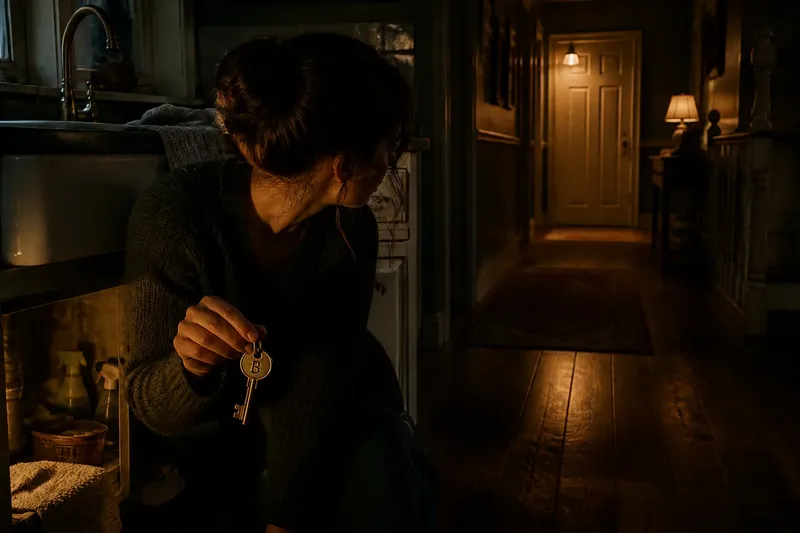
A brass key turns up beneath a character’s kitchen sink, and the episode cuts away before anyone explains it. In a group chat, one viewer says it might connect to the locked room upstairs. By the next morning, another post calls the key proof that the character has been hiding a crime. That leap—from playful possibility to asserted fact—is the fan theory trap.
The distinction matters because fandom often works through close attention, speculation, and shared excitement. A theory can make a scene more interesting without being confirmed by it. To discuss one responsibly, separate what the story establishes from what you infer, then keep the wording honest as the idea travels.
Set the scene
Imagine a fictional mystery series called Harbor House. In one episode, Mara finds a brass key under the sink in her late aunt’s kitchen. A label on the key reads “B.” Mara looks toward a closed door at the end of the hall, but the episode cuts to another scene. No character says what the key opens, and the door is not shown being unlocked.
Viewers have several legitimate observations: the key is brass, it bears a letter, Mara looks toward the door, and the cut leaves the moment unresolved. They can also form a theory: the key may open that door, and the aunt may have kept something there. But neither the possible lock nor the possible secret has been established.
That difference is not pedantic. It tells other viewers whether they are hearing a description of the episode or an interpretation of it. A theory can be compelling and still remain a theory.
Separate the layers
Before sharing an interpretation, sort the available information into three layers. You do not need a spreadsheet; a few notes beside the scene are enough.
- Shown: What appears or happens on screen. In this scene, Mara finds a key and looks at a closed door.
- Said: What dialogue, captions, or other explicit story material states. Here, the label says “B,” but nobody identifies what the letter means.
- Inferred: What a viewer concludes from the shown and said details. The idea that the key opens the upstairs door belongs here.
“Shown” and “said” are not always the same as “settled.” A character may lie, misremember, or speak from limited knowledge. Still, the distinction helps: the episode has shown Mara’s glance; it has not shown what she knows or why she looked there.
Think of a scene like a package with a visible address label. You can read the label, but you should not claim to know what is inside until the story gives you grounds to do so. The clue invites a question. It does not answer every question the clue inspires.
Check the claim
Say you want to post, “The brass key proves the aunt kept evidence in the upstairs room.” Start by underlining the parts that go beyond the scene: “proves,” “kept evidence,” and “upstairs room.” Then ask what would have to be true for each phrase to be justified.
The key could fit a different door. The letter could mark an owner, a box, or something the story has not introduced. Even if it opens the upstairs room, that alone would not establish what is inside or who put it there. The original claim bundles several guesses together and presents the bundle as one confirmed fact.
A more accurate post would say: “Could the key marked B open the upstairs door? Mara’s glance makes me wonder, but the episode hasn’t shown what it fits.” This keeps the fun question and identifies the missing evidence. Readers can respond to the theory without being told the show has already confirmed it.
Use the same check on screenshots and short clips. A crop may omit a line before or after the moment, while a reaction shot can make a cut feel like a direct response even when the scene has not established one. If the exact wording matters, check the episode or a reliable transcript rather than relying only on a reposted caption.
Follow the chain
Now imagine a viewer shares the careful version in a fan forum. Someone replies that a production still shows a matching keyhole near the upstairs door. Another person says the still could have been taken from a different room. A third viewer finds a later scene in which the key is used, but it opens a storage chest instead.
That invented sequence shows why it helps to preserve the claim’s status as new information arrives. The matching keyhole makes the door theory more plausible, but a still may not establish where the key fits. The later scene does establish that the key opens the chest, if the scene clearly shows it. It does not necessarily establish why Mara looked at the door earlier.
Notice the verbs. “The key opens the chest” describes an on-screen action. “The aunt hid evidence in the chest” adds a claim about the contents and the aunt’s intention. Those may become true in a later episode, but they are not interchangeable statements.
When a theory changes, update the wording rather than quietly promoting an earlier guess into canon. You can say, “The new scene confirms the key opens the chest; I’m still unsure what the letter means.” That leaves space for a continuing interpretation without erasing what the story has actually supplied.
When does a clue become a claim?
Can a theory be useful if it is wrong?
Yes. A theory can help viewers notice a visual detail, compare scenes, or enjoy the uncertainty. Its value as conversation does not depend on being confirmed later.
Does a character’s statement count as proof?
It counts as something the character said, not automatic proof that the statement is true. Consider the speaker’s knowledge, motive, and any later scenes that confirm or challenge the account.
How should I label a theory in a post?
Use plain signals such as “I wonder if,” “my read is,” or “this could suggest.” Then name the detail that prompted the idea and the part the story has not established.
What if later episodes confirm the theory?
Point to the later scene that supplies the confirmation and keep its scope precise. Confirmation that a key opens a chest does not also confirm every guess about who placed it there or what the object means.
Share with care
Online repetition can make an inference sound settled even when no new evidence has appeared. A confident thread may be copied into a recap, a fan wiki, or a search result, where later readers encounter the claim without its original caveat. That does not make the interpretation wrong; it makes clear labeling more useful.
Before reposting a theory, keep three questions in view:
- What exact moment, line, or object supports the interpretation?
- What additional assumption connects that detail to the conclusion?
- Does the wording show readers which parts are confirmed and which are guesses?
If you are discussing a newly released episode, consider whether your post reveals plot details and use the community’s spoiler tools. A spoiler label protects the viewing experience; it does not turn an unconfirmed theory into a fact. Keep those two jobs separate.
For the Harbor House scene, the most useful account remains modest: Mara finds a lettered key, looks toward a closed door, and leaves viewers with a question. The key may lead somewhere important, or the glance may point nowhere at all. Calling it a clue preserves the invitation; calling it proof closes a door the story has not opened.
The fan theory trap is easiest to avoid when you make the boundary visible in your own sentence. State what the scene shows, name what you think it might mean, and leave room for the next episode to change your mind. That habit keeps speculation lively without asking other fans to mistake a satisfying possibility for established story.