The Press Kit Is a Frame, Not a Verdict
A press kit can orient you without settling the story. Learn how to separate useful production context from promotional claims and read each item carefully.
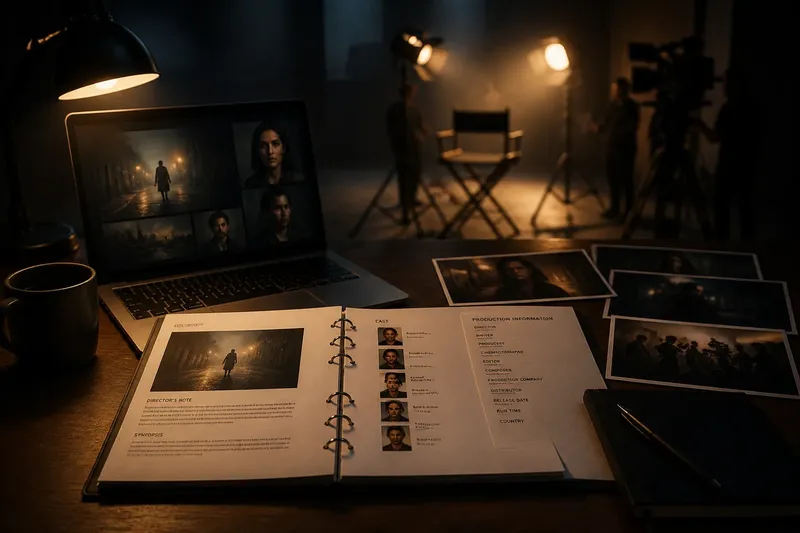
You open a film’s press kit after watching its trailer and find a director’s note, a cast list, stills, and a polished description of the story. The press kit is already shaping what you notice: it chooses which details arrive first and which words follow them. Treat it as an orientation tool, not an independent verdict on the release.
A press kit, sometimes called a media kit or electronic press kit, gathers material supplied to journalists and other media outlets. It can make basic facts easier to check, explain how the production presents its aims, and point toward questions worth asking. Trouble starts when readers mistake a selection of helpful material for a complete or neutral account.
When the framing feels like fact
A kit may describe a story as “fearless,” “groundbreaking,” or “the definitive portrait” of a subject. Those phrases tell you how the publicists want the release positioned. By themselves, they do not establish that the work has those qualities.
The cause is often a shift in category: interpretation is presented in the same clean layout as verifiable production information. A release date, a character name, and a claim about cultural importance can sit side by side, but they do not carry the same evidentiary weight.
Try separating each statement by type before you rely on it:
- Basic production detail: a listed role, credited department, or distributor. Check the relevant credit or official release information if accuracy matters.
- Creative intention: a director’s note about what a scene or character is meant to convey. Treat it as an account of intent, not proof that the result succeeds.
- Promotional judgment: language calling a work singular, urgent, or transformative. Read it as positioning and look for specific support elsewhere.
- Interpretive claim: a statement about what a story represents or why it matters. Consider who is making the claim and what perspective it leaves out.
This small sorting habit keeps the kit useful without asking it to do a critic’s or reporter’s job.
When a detail seems to settle debate
A production note can identify a source of inspiration, explain a creative choice, or describe a character’s background. Readers may then treat that note as the final word on how the work should be understood. The usual cause is confusing an explanation of intention with a ruling on meaning.
Try asking what the statement can actually answer. A director’s note may clarify why a particular setting was chosen. It cannot, on its own, determine how every viewer should interpret the finished work. A cast biography may establish a performer’s role; it does not establish that the portrayal is authentic or representative.
Imagine you read a note saying that a drama was shaped by conversations with people from a community. That is useful context, but it does not tell you who took part, how their input affected the script, or whether the finished story reflects a range of experiences. Keep the claim in view, then separate it from what the work itself shows and from any reporting that gives more detail.
A press kit works a little like a frame around a photograph: it directs attention toward some parts of the image, but it cannot tell you everything outside the border.
When the kit feels complete
Professional design can make a package feel comprehensive. A neatly ordered set of biographies, images, production notes, and approved descriptions may seem to cover the whole subject. Yet a press kit is built to serve a release, so its selection reflects the purpose of publicity.
That does not make every omission suspicious. Kits have practical limits and usually emphasize material that helps outlets identify the work and describe it. The problem is assuming that what is absent must be unimportant—or that the supplied selection represents the only relevant angle.
Try noticing what the kit foregrounds and what it leaves unanswered. Does it identify the people responsible for key creative choices? Does it explain the production’s stated approach while offering no detail about a point the description raises? Is a biography being used as evidence for a claim about the work? These are prompts for follow-up, not grounds for assuming bad faith.
If the answer matters to your understanding, seek an independent source that addresses that particular question. For example, use an official credit list to confirm a role, a direct interview to clarify a stated intention, or a separate account to explore a claim about the production’s effects. Match the source to the question rather than treating a single document as a complete record.
When repeated copy sounds confirmed
The same phrase may appear in a press kit, a distributor’s description, and several short articles. Repetition can make a promotional claim feel independently established, even when each version traces back to the same supplied text.
The cause is source reuse. Publicists offer language that is easy to adapt; outlets may shorten or reproduce it when working with limited space. Several appearances do not necessarily mean several independent checks.
Try tracing the wording. Search a distinctive phrase and compare how it appears across the material you are reading. Look for reporting that adds a named source, documents a separate process, or tests the claim in a different way. A review can offer an independent response to the finished work, but it does not automatically verify behind-the-scenes details.
When you write or discuss the release, attribute the statement precisely: “The press materials describe the film as…” is different from repeating the phrase in your own voice. Clear attribution lets others see whether a claim comes from the production’s publicity or from separate reporting.
When images shape your reading
Stills, portraits, and captions often do more than illustrate a release. Their selection can suggest which character, mood, relationship, or visual style deserves attention. A posed image is not necessarily a scene from the finished work, and a caption may add context the image cannot show.
Try checking the caption and credit before drawing a conclusion from a still. Note whether it is described as an on-set photograph, a publicity portrait, or an image from the production. If the kit includes only a narrow set of images, treat that as a selection made for publicity, not a survey of the full work.
For a review or discussion, describe what the image visibly contains before assigning it a larger meaning. If you need to know whether a moment appears in the release, consult the finished work rather than inferring from the promotional still.
How should you read a press kit?
Is a press kit the same as a review?
No. A press kit is promotional material prepared to introduce a release, while a review offers an independent response to the finished work. Use the kit for context and basic orientation, not as a substitute for criticism.
Can a director’s note explain a film’s meaning?
It can describe intentions or creative choices, which may help you understand how the production presents itself. It does not settle every interpretation or establish that viewers will experience the work as intended.
Are press-kit images scenes from the release?
Some may be production stills, while others may be portraits or publicity images. Read the caption and credit, and avoid treating a posed image as proof of what happens in the finished work.
What should you do with a bold claim?
Identify whether it is fact, intention, interpretation, or promotional judgment, then look for a source suited to checking that type of statement. Attribute it to the press materials until you have a sound reason to present it differently.
A reading order that works
When a kit lands in front of you, use a simple order rather than accepting its arrangement as a guide to truth:
- Start with identification. Note the release title, credited creators, distributor, and any stated release information.
- Mark language that evaluates. Set aside adjectives and broad claims about importance, originality, or impact.
- Separate intention from description. Record what the production says it meant to do, without treating that as a verdict on the result.
- Check captions and credits. Identify who or what an image shows and how the material is described.
- Choose one unresolved question. Find a source that can address it directly, rather than gathering more copies of the same promotional wording.
- Attribute what remains unsettled. If you use the claim, make its origin clear.
This order helps you get value from the package while keeping its limits visible. The press kit can tell you how a release wants to be introduced, supply useful names and context, and suggest questions worth pursuing. Read it with that purpose in mind, and the frame can guide your attention without passing judgment for you.
For any release, the most useful habit is to keep the source attached to the claim. When a statement comes from a press kit, say so; when another source changes or complicates it, make that distinction clear. That small act gives readers a better view of both the work and the publicity around it.